Emirates Health Services Enhances Quality of Life and Anticipates Community Needs
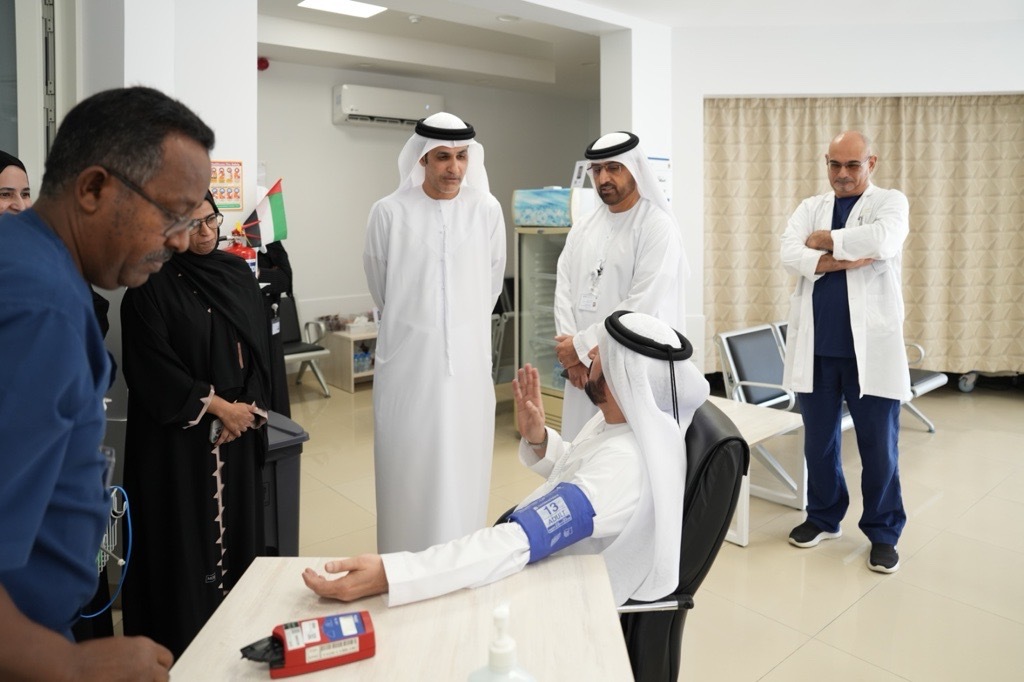
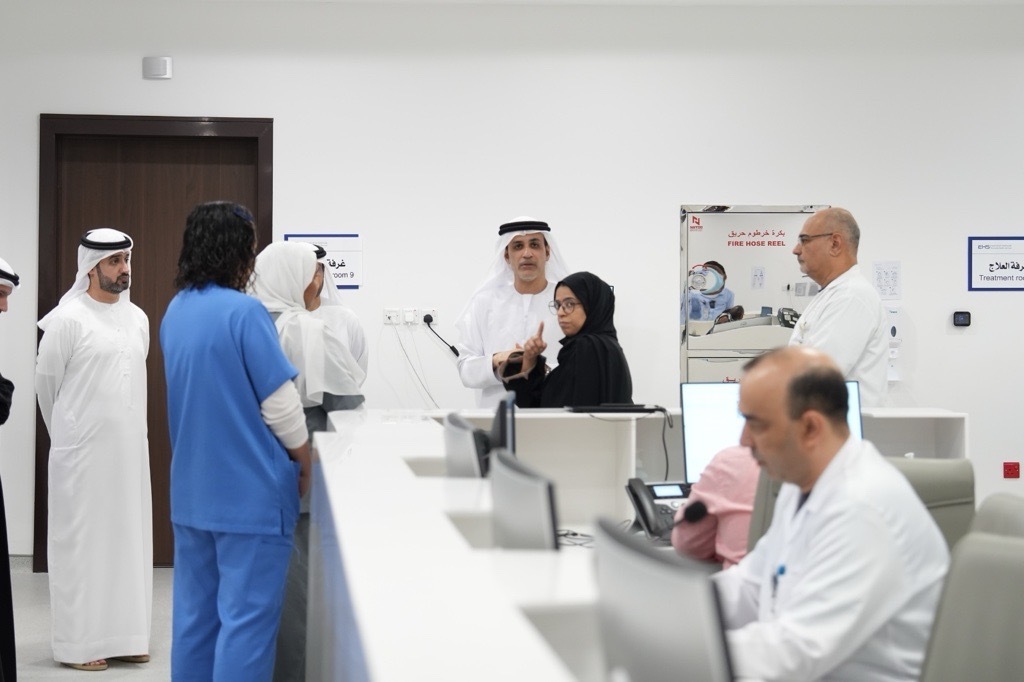
Emirates Health Services (EHS) showcased qualitative achievements and developmental projects across several of its affiliated health facilities, including Saqr Hospital, Ibrahim Bin Hamad Obaidullah Hospital, and Khorfakkan Hospital. This initiative took place during an inspection visit led by His Excellency Dr. Yousif Mohamed AlSerkal, Director-General of EHS, accompanied by His Excellency Dr. Essam Al Zarooni, Executive Director of the Medical Services Sector at EHS. The visit focused on monitoring the quality and development of services, particularly in emergency care, intensive care, and customer experience, reflecting EHS's approach to delivering advanced, human-centric healthcare grounded in innovation and proactivity.
His Excellency Dr. Yousif AlSerkal stated, "The development we witness today in the level of healthcare services reflects EHS's commitment to enhancing customer experience through integrated care models that place the individual at the heart of our focus. These services are tailored to meet the needs of diverse segments of society through flexible, interconnected services supported by digital solutions and specialized expertise, contributing to improved quality of life and the establishment of proactive care concepts."
Advanced Customer Experience Powered by Digital Transformation
EHS's efforts extend beyond service development to establish genuine partnerships with customers by involving them in the design and enhancement of healthcare services. This is achieved through their representation on executive committees within the health facilities, a qualitative step reflecting an institutional shift towards more inclusive, customer-centric models. Furthermore, 24 Customer Councils were organized across the three facilities, reinforcing EHS's approach to strengthening the role of customers as active partners in developing the healthcare system.
This integrated approach is evident in customer satisfaction indicators regarding their journey, with satisfaction levels at these facilities reaching 98% in 2025, as measured by the "Customer Pulse" system.
Advanced Medical Readiness and Emergency Response Aligned with Highest Standards
To enhance the readiness of health facilities and improve emergency response efficiency, Khorfakkan Hospital emerged as an advanced model in developing emergency services. Its emergency department received approximately 65,000 visits in 2025. Concurrently, a Fast-Track Clinic for non-urgent cases was established, helping to reduce congestion, accelerate care delivery, and improve customer experience, while also enhancing resource utilization efficiency and the capacity to handle critical cases.
The hospital's emergency services are supported by advanced equipment, including a blood gas analyzer, which enables urgent tests and immediate medical decisions that help save patients' lives, reflecting a high level of preparedness to handle various emergency scenarios in line with global best practices.
Relatedly, emergency and intensive care departments in the other two EHS facilities saw qualitative development. The emergency department at Saqr Hospital received over 102,000 visits in 2025, while Ibrahim Bin Hamad Obaidullah Hospital achieved a qualitative leap in intensive care services by increasing its capacity by 250%. The hospital also provided dialysis services within the ICU, contributing to comprehensive care for critical cases.
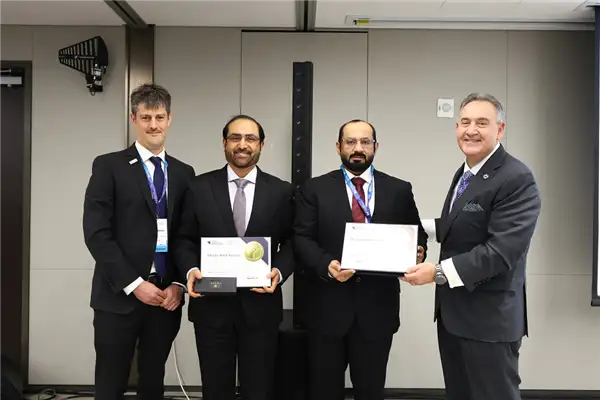
The visit also included a review of the blood bank services, which holds health accreditation from the Association for the Advancement of Blood & Biotherapies. The blood bank played a pivotal role in enhancing the strategic blood supply through a range of qualitative initiatives, most notably a project for freezing and storing red blood cells for up to 10 years using advanced technology. Additionally, 408 blood donation campaigns were organized. The blood bank dispensed approximately 38,000 units of blood and its components, introduced advanced devices for directly separating platelets and plasma, and updated laboratory testing equipment to ensure the highest levels of quality and safety, thereby enhancing the health facilities' readiness to handle various emergency cases.
Qualitative Expansion in Specialized Services and Medical Innovation
As part of their ongoing development projects, the three facilities have seen a notable expansion in the scope of specialized services. Saqr Hospital offers approximately 20 medical specialties, with the introduction of new specialties such as blood diseases and oncology, a pain clinic, and a wound care clinic. The hospital has also integrated artificial intelligence technologies for early detection of breast cancer and chest diseases, as well as proactive diagnosis of osteoporosis, achieving up to 98% accuracy in breast cancer diagnosis. An integrated Breast Care Unit was also established as a center of excellence.
The hospital's efforts also included developing a Fast-Track Clinic, which enables the delivery of integrated services on a single visit, and enhancing pediatric services. This made it the only government hospital in the emirate to combine specialized pediatric surgery with pediatrics, earning it the designation of a Child-Friendly Hospital. Saqr Hospital also established a specialized dental clinic for people of determination, serving 822 patients with a satisfaction rate of 95%, a step that reflects its commitment to providing inclusive services for all community segments.
The infrastructure at Saqr Hospital underwent qualitative expansion, including the addition of a larger emergency department with future expansion capability exceeding 80%, and the establishment of a specialized ophthalmic surgery room within outpatient clinics. This enhanced emergency response efficiency and contributed to elevating the quality of services provided.
At Ibrahim Bin Hamad Obaidullah Hospital, which offers about 26 specialties, its status as an advanced center was reinforced through internationally accredited centers of excellence in diabetes, thalassemia, and strokes. The hospital launched the "Golden Hour" project for strokes, successfully reducing response time from 116 minutes to 38 minutes and streamlining patient journey steps from 12 to 5 through advanced organizational and digital solutions.
The hospital added over 11 new specialized services, including hepatology, infectious diseases, and endocrinology. It also introduced AI technologies for early diagnosis and developed pharmacy services through a robotic pharmacy, self-service dispensing machines, and a drive-through medication pickup service, dispensing over 582,000 medication packages with an average dispensing time not exceeding 36 seconds.
At Khorfakkan Hospital, which houses a center of excellence for diabetes services and is designated as a Senior-Friendly and Mother-and-Child-Friendly Hospital, a qualitative expansion project for the obstetrics and gynecology department is underway. This includes constructing a new building with 88 rooms comprising delivery rooms, incubators, neonatal intensive care units, operating rooms, and isolation rooms, enhancing capacity to meet the growing demand for services.
The hospital also introduced several specialized services, including child mental health services alongside capacity-building programs for pediatricians. It established specialized clinics for asthma treatment and Down syndrome care, in addition to creating an intermediate care unit, thereby enhancing care integration and elevating service quality for various population segments.
High Operational Performance Reflecting Healthcare System Efficiency
The three hospitals recorded notable operational figures in 2025. Their accident departments, specialized clinics, and inpatient wards received over half a million visits. These facilities performed 2,000 endoscopies, 55 bariatric surgeries, 83 neurosurgical procedures, and over 30,000 dialysis sessions. Ibrahim Bin Hamad Obaidullah Hospital expanded its dialysis services, resulting in a 114% increase in capacity, alongside the addition of mobile dialysis units. Furthermore, through the Visiting Consultants Program, these facilities attracted about 100 visiting physicians from over 25 countries, who provided more than 2,733 specialized consultations and performed over 257 specialized surgeries.
Internationally Accredited Institutional Framework
These achievements are bolstered by an integrated system of international accreditations obtained by the facilities. These include ISO certifications in occupational safety, mental health, food safety, and medical laboratory quality, in addition to Business Continuity accreditation focused on risk management, environmental sustainability, information security, and technical resource management. This supports operational efficiency and the continuity of service delivery under various circumstances.